Retatrutide Peptide
You've probably already heard of GLP-1 medications like Ozempic taking over the market. However, there is a new and...

Last updated: April 15, 2026
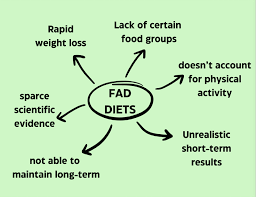
A “fad diet” is a trendy diet pattern that promises quick results. It is the “magic bullet” that claims to finally help you lose weight. Fad diets often promise rapid weight loss, claiming that cutting out one food is the key to losing weight. In a world full of social media and diet culture pressure, it can be tempting to believe these claims.
What it is: A diet based on foods thought to be eaten during the Paleolithic era, emphasizing meats, fruits, vegetables, and nuts while excluding grains, dairy, and legumes.
Why people try it: Claims to cure obesity, cardiovascular disease, diabetes, cancer and osteoporosis.
Potential concerns: Eliminating whole foods groups may be challenging to follow, and may result in nutrient deficiencies, specifically calcium and fiber.
What they are: Short-term diets that involve consuming only liquids or juices to “cleanse” the body.
Why people try them: Marketed as a way to reset the body, improve energy, or lose weight quickly.
Potential concerns: These diets are extremely low in calories and protein, may cause fatigue and nutrient deficiencies, and lack scientific evidence supporting detoxification claims.
What it is: A very low-carbohydrate, high-fat diet designed to shift the body into ketosis.
Why people try it: Promoted for rapid weight loss and blood sugar control.
Potential concerns: May be difficult to maintain, restricts fiber-rich foods, can increase risk of nutrient deficiencies, and may cause fatigue, dizziness, and heartbeat alterations.
What it is: A diet that includes only animal-based foods, eliminating all plant foods.
Why people try it: Often marketed for simplicity and inflammation reduction.
Potential concerns: Severely limits fiber, vitamins, and phytonutrients, and lacks long term research on safety.
What it is: A short-term diet centered around consuming large amounts of cabbage soup with limited other foods.
Why people try it: Promises quick weight loss in a short time.
Potential concerns: Extremely low in calories, not nutritionally adequate, and will likely lead to weight regain.
Fad diets are meant to be short-term and are often promoted as quick fixes. They are hard to follow for a long time and focus on temporary changes instead of healthy habits that last. Many fad diets are very low in calories and do not provide enough important nutrients. Over time, eating too little can place stress on the body and affect overall health. In addition, these diets often do not include proper health warnings for people with chronic conditions, which can be harmful.
Weight Cycling/Yo-Yo Dieting
Weight cycling, or repeated weight loss followed by weight regain, is a common result of dieting. Over time, this cycle can strain the body and increase the risk of chronic conditions such as type 2 diabetes, hypertension, reduced bone density, inflammation, and cardiovascular disease.
While fad diets can affect anyone, some groups may face greater health risks. Adolescents and young adults are especially vulnerable because their bodies are still growing and need enough energy and nutrients. People with a history of dieting or disordered eating may also be at higher risk, as fad diets can worsen unhealthy eating patterns. In addition, individuals with chronic conditions such as diabetes, heart disease, or kidney disease may experience harmful effects if they follow restrictive diets without medical guidance.
Overall, studies show that only about 20% of diets are successful long-term. Making small changes over time, rather than cutting out entire foods, can lead to results that are more sustainable. Here’s how you can eat in a healthy way without experiencing energy crashes or the stress of a strict diet.
Rather than chasing quick fixes, adopting balanced eating habits can support health and sustainable weight management over time.
References:
View of The effectiveness and health impact of fad diets on obese patients: a literature review
Last updated: April 15, 2026
AZ Dietitians offers in-person and virtual appointments for Arizona clients. Now offering telehealth services for clients in Colorado, Utah, and California.
You've probably already heard of GLP-1 medications like Ozempic taking over the market. However, there is a new and...

Fasting can affect women differently depending on factors like age, activity level, hormonal health, and reproductive status. Learn what research says about intermittent fasting, PCOS, menstrual health, bone density, and more.

Could the ultra-processed foods you eat regularly be affecting your brain health? Learn about the potential connections between ultra-processed foods, memory, mood, inflammation, and cognitive health, along with simple ways to make more nutritious choices.

Wondering what to eat after gallbladder removal? Learn how your diet may need to change after surgery and get practical tips for supporting digestion as your body adjusts.