Last updated: April 8, 2026
When people think about insulin resistance, fiber is rarely the first nutrient that comes to mind, but it should be! Maybe you’ve been told to add more fiber to your diet, or you’ve heard that it can prevent constipation. But did you know that fiber plays an essential role in Type 2 Diabetes management?
What is Fiber?
Fiber is a type of carbohydrate that the body cannot fully digest, so it passes through the digestive tract rather than being fully absorbed. This slows down digestion and adds bulk to the stool. Fiber is essential to overall health, particularly for individuals with Type 2 Diabetes. It can improve blood sugar control, insulin sensitivity, and heart and digestive health. Despite the many benefits, most people consume less than what is recommended.
The National Academy of Medicine’s Fiber Recommendations are as follows:
- 25 grams per day for women aged 50 or under
- 38 grams per day for men aged 50 or under
- 21 grams per day for women over 50
There are two types of fiber: soluble and insoluble.
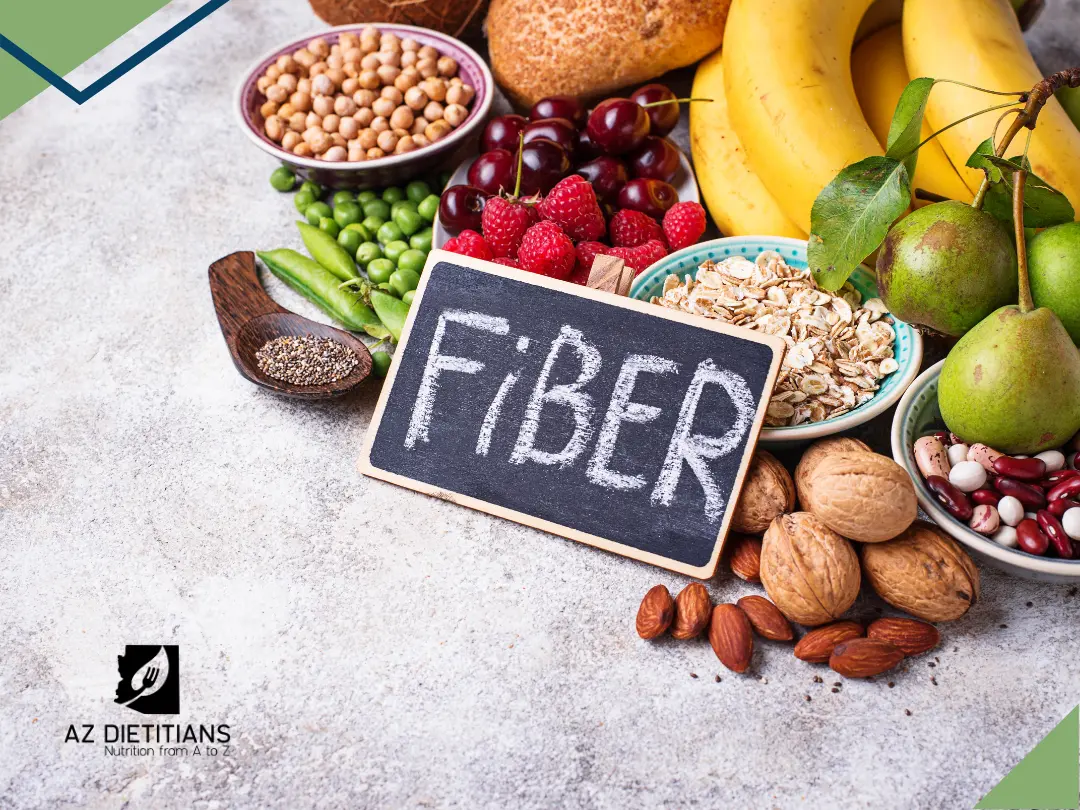
Soluble fiber dissolves in water, forming a gel-like substance in the stomach. This slows the emptying of food from the stomach into the small intestine. The major sources of soluble fiber include oats, beans, apples, and citrus fruits.
Insoluble fiber does not dissolve in water but adds bulk to the stool by speeding up the passage of food through the digestive system. Major sources of insoluble fiber include whole grains, nuts, and vegetables.
What is Insulin Resistance?
Insulin is a hormone made by your pancreas that helps to move glucose from the bloodstream into the cells, so that they can use it for energy. Insulin resistance occurs when the cells do not respond well to this hormone.
Think of insulin as the key that opens the door so glucose can enter your cells. With insulin resistance, those “doors” don’t open as easily.
This causes glucose to stay in the bloodstream longer. To compensate, the pancreas produces more insulin, which, over time, causes cells to become even less sensitive to insulin. Eventually, this may lead to prediabetes or Type 2 Diabetes.
Insulin resistance may be caused by:
How Fiber Affects Insulin Sensitivity
When you eat fiber, it slows how quickly sugar enters the bloodstream, which helps prevent blood sugar from spiking and reduces blood sugar after meals. This means your body doesn’t have to release as much insulin at once. Since fiber is not digested, it slowly makes its way through the digestive tract. This may also play a role in weight loss and regulation by keeping you fuller for longer after meals. Fiber also feeds healthy gut bacteria. These bacteria make substances that help insulin work better. Together, these effects help your cells become more responsive to insulin and improve overall blood sugar control.
Tips for Increasing Fiber in Your Daily Diet
- Start slowly – For example, add an apple or a handful of veggies to your meal.
- Make a swap – Instead of white rice or pasta, try whole-grain pasta and bread, quinoa, or barley.
- Mix it in – Add a tablespoon of chia seeds, flaxseeds, or nuts to baked goods, cereal, or yogurt.
- Variety – Incorporate a variety of different fruits, vegetables, and nuts into your diet.
References
Cleveland Clinic. (2021a). Insulin resistance: What it is, causes, symptoms & treatment. Cleveland Clinic; Cleveland Clinic. https://my.clevelandclinic.org/health/diseases/22206-insulin-resistance
Dietary fiber: Essential for a healthy diet. (2025). Mayo Clinic. https://www.mayoclinic.org/healthy-lifestyle/nutrition-and-healthy-eating/in-depth/fiber/art-20043983?cjdata=MXxOfDB8WXww&cjevent=3ef150a7efd511f08197010d0a1eba8e&cm_mmc=CJ-_-100357191-_-5250933-_-Evergreen+Link+for+Mayo+Clinic+Diet&utm_source=cj&utm_content=100357191&utm_capaign=3-months
Mayo Clinic. (2021, January 5). How Much Fiber is Found in Common Foods? Mayo Clinic. https://www.mayoclinic.org/healthy-lifestyle/nutrition-and-healthy-eating/in-depth/high-fiber-foods/art-20050948
noble.dana. (2025, May 8). How to get more fiber in your diet – Mayo Clinic Press. Mayo Clinic Press. https://mcpress.mayoclinic.org/nutrition-fitness/how-to-get-more-fiber-in-your-diet/
Written By: AZ Dietitians
Published: April 06, 2026
Last updated: April 8, 2026