Retatrutide Peptide
You've probably already heard of GLP-1 medications like Ozempic taking over the market. However, there is a new and...

Last updated: February 5, 2026
It is well known that carbohydrates are the body’s primary source of energy, making carbohydrate metabolism essential for maintaining the body’s energy supply. Once carbohydrates are consumed, the body breaks them down into glucose, which is then absorbed into the bloodstream. However, in order to transform the glucose into usable energy, multiple steps involving specific enzymes and vitamins are required. In this blog post, we will explore the process of carbohydrate metabolism, focusing specifically on the role of thiamine (vitamin B1) in energy production.
Thiamine is most commonly known as Vitamin B1, a water-soluble vitamin (meaning that it is excreted through urine). Thiamine has a few different roles in the body, which include aiding in cellular function, cellular growth, and carbohydrate metabolism. The main role of thiamine is to act as a coenzyme in the conversion of carbohydrates to energy. Coenzyme is a fancy way of saying that a specific molecule acts as a supporting role to an enzyme in chemical reactions. Vitamin B1 is an essential vitamin, meaning the body does not produce it on its own, therefore it must be obtained through the diet. Thiamine can be found in various foods, which we will dive into later, or it can be taken as a supplement. Adequate intake of thiamine is important, because it is essential for the breakdown and production of energy in the body.
Carbohydrate metabolism is the body’s process of breaking down glucose (from carbohydrate intake) and turning it into usable energy for the body (ATP). In a brief overview, carbohydrate metabolism has a few different steps to complete the process:
These are the main steps for carbohydrate metabolism when glucose is available and active. However, there are additional pathways to supply energy if glucose is unavailable, or limited. The body can create glucose through different molecules, or it can convert glycogen (the body’s stored form of glucose) into glucose from the muscles and liver.
The active form of thiamine (vitamin B1), is thiamine pyrophosphate (TPP). The active form of thiamine is a required coenzyme for various enzyme reactions contributing to carbohydrate metabolism. Once thiamine is absorbed by the body, it is converted to its active form in the kidneys, known as thiamine pyrophosphate. Thiamine in its active form, aids in the breakdown and conversion of the pyruvate molecule (end product of glycolysis), into acetyl coA. Acetyl coA is an essential molecule in the pathway for the production of ATP and is an intermediate molecule delivering carbons. Thiamine has a few different roles within carbohydrate metabolism:
With the information provided above, we can conclude that a thiamine deficiency would cause harm to the body’s metabolism of carbohydrates. When thiamine is deficient in the body, a few problems can occur when it comes to the energy system:
As noted above, thiamine is not produced by the body, which means we are required to obtain it through our diet. The daily recommendation of thiamine is different for men, women, and children. Let’s take a quick look at the daily recommended intake before diving into some food sources of thiamine:
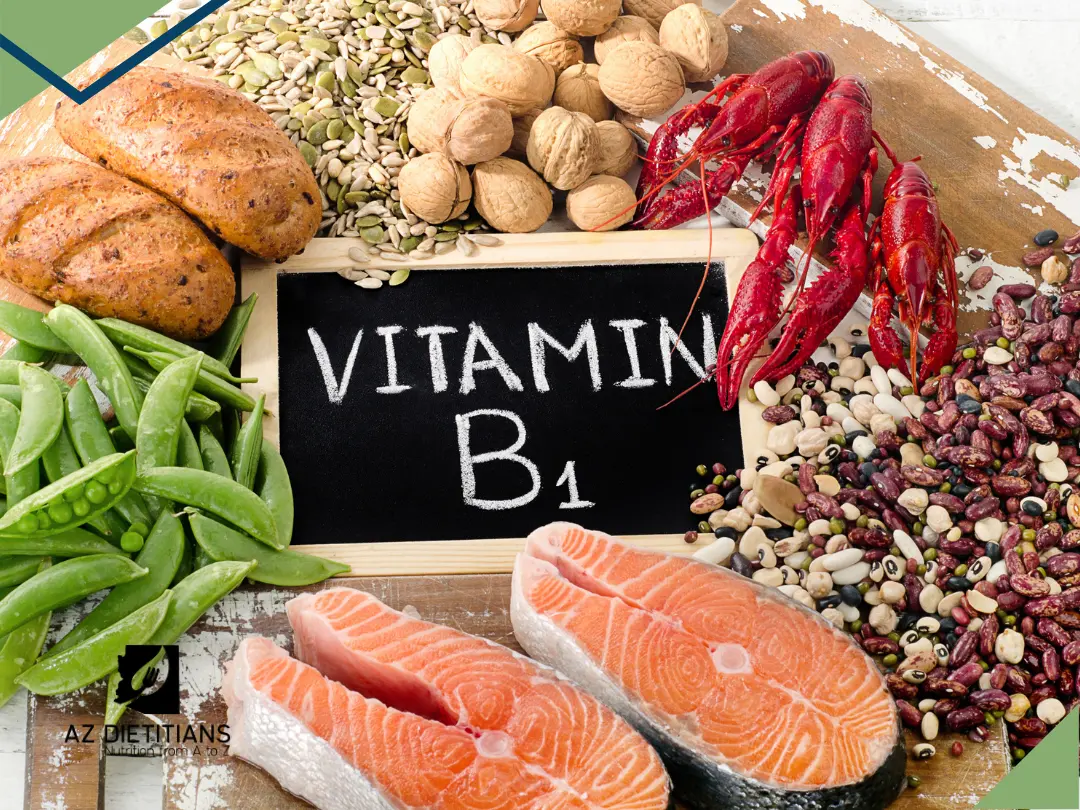
The good news is, thiamine can be found in foods and in supplements. Thiamine is prevalent in foods that you may already have in your regular rotation. Some great sources of thiamin include:
Oftentimes we focus on the macronutrients, such as carbs, proteins and fats, but we forget about key micronutrients. Thiamine is one of the micronutrients that is essential for important functions in the body. As we discussed, without thiamine, carbohydrate metabolism would suffer, and energy in the body would be limited. As always, if you suspect a thiamine deficiency, speak with your physician and dietitian for further evaluation and planning.
References:
Lonsdale, D. (2006). A review of the biochemistry, metabolism and clinical benefits of thiamin(e) and its derivatives. Evidence-Based Complementary and Alternative Medicine, 3(1), 49–59. https://doi.org/10.1093/ecam/nek009
Lumen Learning. (n.d.). Carbohydrate metabolism. In Anatomy and Physiology II: Metabolism and Nutrition. Retrieved [today’s date, e.g., September 9, 2025], from https://courses.lumenlearning.com/suny-ap2/chapter/carbohydrate-metabolism-no-content/ Lumen Learning
MedlinePlus. (2025, January 21). Thiamin [Medical encyclopedia]. U.S. National Library of Medicine. https://medlineplus.gov/ency/article/002401.htm MedlinePlus
Last updated: February 5, 2026
AZ Dietitians offers in-person and virtual appointments for Arizona clients. Now offering telehealth services for clients in Colorado, Utah, and California.
You've probably already heard of GLP-1 medications like Ozempic taking over the market. However, there is a new and...

Fasting can affect women differently depending on factors like age, activity level, hormonal health, and reproductive status. Learn what research says about intermittent fasting, PCOS, menstrual health, bone density, and more.

Could the ultra-processed foods you eat regularly be affecting your brain health? Learn about the potential connections between ultra-processed foods, memory, mood, inflammation, and cognitive health, along with simple ways to make more nutritious choices.

Wondering what to eat after gallbladder removal? Learn how your diet may need to change after surgery and get practical tips for supporting digestion as your body adjusts.