Retatrutide Peptide
You've probably already heard of GLP-1 medications like Ozempic taking over the market. However, there is a new and...

Last updated: February 5, 2026
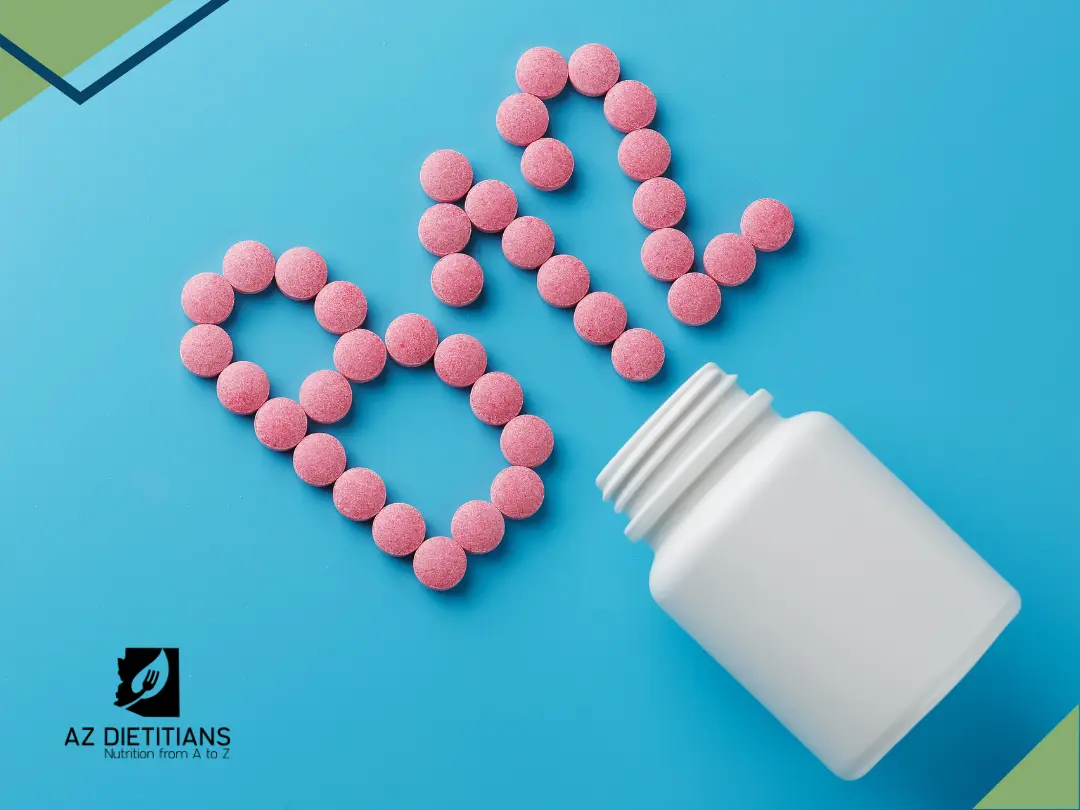
Vitamin B₁₂ is found in animal products like meat, dairy, eggs, and fish and is an essential nutrient for DNA synthesis, red blood cell formation, nervous system function, and normal growth and cell reproduction. Normally, vitamin B₁₂ requires stomach acid and intrinsic factor to bind and be absorbed. However, when absorption is impaired, both oral and sublingual supplementation forms can be effective.
Oral capsule vitamin B₁₂ supplementation absorption involves two main mechanisms. First, active absorption depends on an intrinsic factor (IF), which is a glycoprotein made in the stomach. Once in the small intestine, Vitamin B₁₂ binds to IF, forming a complex that is recognized by receptors on the intestinal walls and then absorbed into the bloodstream. This pathway is efficient but saturable. Second, passive diffusion occurs when very high oral doses are consumed. A small percentage, around 1–2% of the dose, is absorbed passively across the gut lining without IF. This allows oral megadoses (e.g., 1,000 µg or more daily) to raise serum B₁₂ levels even in individuals with pernicious anemia or low stomach acid.
Sublingual supplementation bypasses much of the digestive system. Tablets or lozenges are placed under the tongue and dissolve, allowing some vitamin B₁₂ to be absorbed directly through the oral mucosa into the bloodstream.
Vitamin B₁₂ absorption depends on the dose and route. At normal dietary levels (1–2 mcg), absorption relies on intrinsic factor and maxes out around 1.5–2 mcg per meal. At higher supplement doses (500–2000 mcg), only about 1–2% is absorbed passively, but this is still effective for treating a deficiency. Sublingual B₁₂ is often marketed as superior, but studies show it offers no significant absorption advantage over oral capsules, as both raise serum B12 levels similarly.
In conditions like pernicious anemia or post-gastric surgery, intrinsic factor is insufficient. While intramuscular injections remain the gold standard, high-dose oral supplementation (≥1,000 µg daily) shows promising efficacy comparable to injections in many cases. Individuals often favor sublingual forms with such issues due to the theoretical bypass of the digestive tract.
Certain populations are at higher risk of vitamin B₁₂ deficiency and may benefit more from supplementation, regardless of their dietary intake. Older adults, for example, often experience conditions that affect their ability to absorb nutrients. For instance, atrophic gastritis reduces stomach acid necessary for releasing B₁₂ from food proteins. This makes them less able to absorb naturally occurring B₁₂, even if their diet includes animal products. Additionally, individuals on long-term proton pump inhibitors (PPIs) or metformin therapy are at increased risk due to drug-related malabsorption. Lastly, vegetarians and vegans, who avoid animal products altogether, are also common candidates for B₁₂ supplementation.
Make sure to consult with your provider before taking any supplements! They will help guide you to make the best choice in terms of type and dosage.
Choosing supplements that have been certified by a third-party ensures content safety, accuracy, and purity. The National Sanitation Foundation (NSF) grants its seal of approval when it determines that a product, its manufacturing process, and the manufacturing facility comply with its internal requirements. The following oral and sublingual B₁₂ supplements are some examples of NSF-certified for safety and label accuracy:
Whether you choose oral capsules or sublingual tablets, daily high-dose B₁₂ supplementation can effectively restore levels in most people who are deficient, sometimes even with compromised B₁₂ absorption. The evidence shows that any route of supplementation is effective, so use the therapy regimen that works best for you and your healthcare team. Always choose NSF-certified supplements to ensure purity and accuracy. If you have known absorption issues or medical conditions, work with a healthcare provider to determine the ideal route and dosage for your needs.
References:
Abdelwahab, O. A., Abdelaziz, A., Diab, S., Khazragy, A., Elboraay, T., Fayad, T., Diab, R. A., & Negida, A. (2024). Efficacy of different routes of vitamin B12 supplementation for the treatment of patients with vitamin B12 deficiency: A systematic review and network meta-analysis. Irish journal of medical science, 193(3), 1621–1639.
Brito, A., Habeych, E., Silva-Zolezzi, I., Galaffu, N., & Allen, L. H. (2018). Methods to assess vitamin B12 bioavailability and technologies to enhance its absorption. Nutrition Reviews, 76(10), 778-792.
Butola, L. K., Kute, P. K., Anjankar, A., Dhok, A., Gusain, N., & Vagga, A. (2020). Vitamin B12-do you know everything. Journal of Evolution of Medical and Dental Sciences, 9(42), 3139-47. DOI: 10.14260/jemds/2020/688
DynaMed. (2024). Vitamin B12 deficiency. EBSCO Information Services.
Gluckman, C. R. (2020). Chronic atrophic gastritis: don’t miss these nutritional deficiencies. Pract Gastroenterol, 44(44), 34-9.
Mumtaz, H., Ghafoor, B., Saghir, H., Tariq, M., Dahar, K., Ali, S. H., … & Syed, A. A. (2022). Association of Vitamin B12 deficiency with long-term PPIs use: A cohort study. Annals of Medicine and Surgery, 82.
Office of Dietary Supplements. (2023). Vitamin B12. National Institutes of Health.
Last updated: February 5, 2026
AZ Dietitians offers in-person and virtual appointments for Arizona clients. Now offering telehealth services for clients in Colorado, Utah, and California.
You've probably already heard of GLP-1 medications like Ozempic taking over the market. However, there is a new and...
Fasting can affect women differently depending on factors like age, activity level, hormonal health, and reproductive status. Learn what research says about intermittent fasting, PCOS, menstrual health, bone density, and more.
Could the ultra-processed foods you eat regularly be affecting your brain health? Learn about the potential connections between ultra-processed foods, memory, mood, inflammation, and cognitive health, along with simple ways to make more nutritious choices.

Wondering what to eat after gallbladder removal? Learn how your diet may need to change after surgery and get practical tips for supporting digestion as your body adjusts.