Retatrutide Peptide
You've probably already heard of GLP-1 medications like Ozempic taking over the market. However, there is a new and...

Last updated: February 5, 2026
Created by Rachel Raymond, Dietetic Intern
According to the American Heart Association, about half of U.S. adults have high blood pressure[1]. So, what does that mean, and why do we need to watch out for it? In this post, you’ll find answers to these questions plus how you can control or prevent high blood pressure.
When someone has constantly high blood pressure (hypertension), it means that the force of the blood pushing on the artery walls is too high[2]. This pressure can cause damage to blood vessels and internal organs. Over time, this can lead to a stroke, a heart attack, heart failure, or even kidney failure[2].
Many people do not have any symptoms of high blood pressure. That’s why it is important to have your doctor or nurse regularly measure your blood pressure. He or she will then tell you the two numbers representing your blood pressure. For example, the doctor might say that your blood pressure is 140 over 90 (also expressed as 140/90). The top number is the systolic pressure (SBP) and the bottom number is the diastolic pressure (DBP). The systolic number shows the pressure in the arteries while the heart is beating. The diastolic number shows the pressure in the arteries between heartbeats. These numbers tell us if we should be concerned about our blood pressure. See the chart below to know which numbers are healthy and which numbers that we need to monitor.
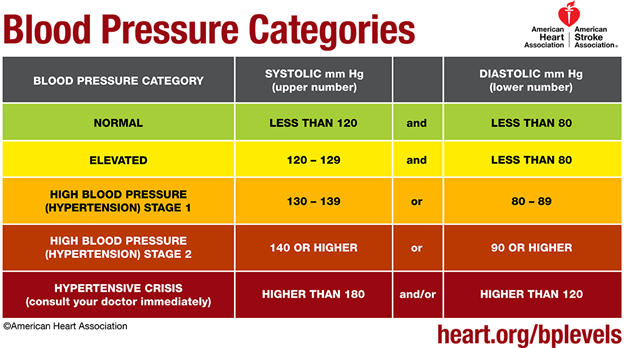
As you can see, the pressure I mentioned earlier would be classified as stage 2 high blood pressure (hypertension). A healthy blood pressure would be 120/80 or less.
There are a few ways to lower blood pressure. We first recommend making some lifestyle changes and then talking with your doctor about a medication that might help. Some lifestyle changes you can make include eating less salt, following a balanced eating pattern, and exercising more. I will go over these lifestyle changes and a few others below.
High sodium intake has been shown to increase hypertension while limiting sodium intake has been shown to decrease hypertension[3]. When extra sodium floats around in your blood, it pulls water into your blood from other body tissues[4]. This raises the amount of blood inside your vessels. With more blood flowing, the pressure builds and places extra strain on your heart [4].
Now, although sodium increases blood pressure, we’re not telling you to cut salt out of your diet completely. Sodium is an essential nutrient for fluid balance, sending nerve impulses and muscle function[4]. We simply recommend aiming for 1,500 mg of sodium per day if you have high blood pressure. For others, the 2015-2020 dietary guidelines say to limit sodium to 2300 mg (1 teaspoon) of salt per day[5].
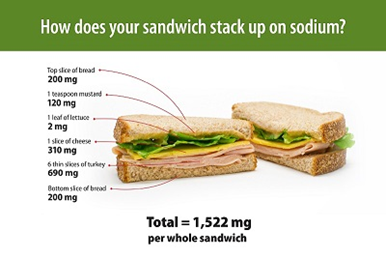
Many of us know that processed foods are high in sodium because they taste salty, but did you know that much of the sodium in a standard diet actually comes from foods such as breads, pizza, sandwiches, cold cuts, soups, burritos, tacos, chicken, cheese, and eggs? View the picture on the side to see how quickly the sodium can add up in a common turkey sandwich.
Now that we know where sodium is hiding in our diet, we can talk about how to limit it. The following ideas will help you to limit your sodium intake:
A balanced eating pattern was designed to prevent high blood pressure; this program is called the DASH diet. DASH stands for Dietary Approaches to Stop Hypertension. Studies have shown that the DASH diet can lower your blood pressure[6]. This is a meal plan that you and your whole family can follow without feeling restricted. It’s rich in fruits and vegetables while being low in fat and sodium. Someone who needs 2,000 calories a day that follows the DASH diet would need[7]:
There are a few DASH diet sample menus on the Mayo Clinic’s website. Below is one of those sample menus[8]:
1 cup old-fashioned cooked oatmeal* topped with 1 teaspoon cinnamon
1 slice whole-wheat toast
1 teaspoon trans fat-free margarine
1 banana
1 cup fat-free milk
Tuna salad made with:
8 Melba toast crackers
1 cup fat-free milk
Beef and vegetable kebab, made with:
1 cup cooked wild rice
1/3 cup pecans
1 cup pineapple chunks
Cran-raspberry spritzer made with:
1 cup light yogurt
1 medium peach
*To further reduce sodium, don’t add salt when cooking the oatmeal.
This menu provides 6 servings of grains, 5 servings of vegetables, 5 servings of fruits, 3 servings of low-fat dairy, 6 servings of meat, 1 serving of nuts, 3 servings of fats and oils and no sweets. Below is the nutritional analysis for the menu above[8].
| Nutritional Analysis | |||
| Calories | 1,868 | Cholesterol | 114 mg |
| Total fat | 45 g | Sodium | 1,332 mg |
| Saturated fat | 7 g | Total Carbohydrate | 277 g |
| Monounsaturated fat | 19 g | Dietary fiber | 29 g |
| Potassium | 4,170 mg | Total sugars | 125 g |
| Calcium | 1,083 mg | Protein | 103 g |
| Magnesium | 423 mg |
Lose Weight: One of the most effective steps to lower blood pressure is to lose weight. One study showed that weight loss combined with the DASH diet for 4 months caused a drop in SBP by 16.1 and a drop in DBP by 9.9 [9]. This is a huge difference! The DASH diet alone lowered blood pressure less than that. It dropped the SBP by 11.2 and the DBP by 7.5 over 4 months[10]. This goes to show that weight loss combined with a low-sodium, well-balanced diet can help reduce blood pressure the most.
Exercise Regularly: Studies show that exercise significantly brings blood pressure down no matter what someone’s previous blood pressure or activity level was[10]. They also show that any type of aerobic exercise will make a difference. Aim for at least 150 minutes of heart-pumping exercise each week[5]. Ideas include walking, jogging, cycling, swimming, strength training, or dancing. Many enjoy finding an exercise buddy or a fitness class to help them achieve fitness goals.
Limit Alcohol: Alcohol can increase blood pressure right after drinking, and regular drinking can lead to long-term high blood pressure[11]. Men should drink no more than 2 drinks per day and women should not have more than 1 drink per day[5]. Dropping your alcohol intake will help drop your blood pressure too.
Quit Smoking: You and I both know that smoking is one of the worst things you can do for your health. Chronic smoking causes high blood pressure[12]. Even secondhand smoke is dangerous for health. Please see your doctor about quitting smoking to reduce your blood pressure and get on a path towards overall better health.
Reduce Stress: In our fast-paced world, stress isn’t always something that we can avoid. However, it is something that we can learn to manage better. Stress has been shown to influence atherosclerosis, which is the stiffening of the arteries[12]. When the blood vessels can no longer stretch like they need to, the pressure builds. When stress is reduced, blood pressure declines[12]. That’s why it’s important to keep our stress levels in check. Some simple ways to reduce your stress include prayer, meditation, and yoga[12]. These actions and any others that help you relax are useful for bringing blood pressure down.
Monitor your Blood Pressure Regularly: If you have high blood pressure, it’s a good idea to monitor it on your own at home to make sure you’re staying at a safe level. You can buy a blood pressure monitor without a prescription, but first ask your doctor about how to use the monitor before you get started. If you notice any spikes in pressure, call your doctor. As you make these lifestyle changes, you will be able to see a difference in your blood pressure numbers.
As you can see, there are many pieces to the puzzle that controls blood pressure. If you are overwhelmed, just begin by choosing one or two changes that you can make for a to improve your health. If you have any further questions about how to manage your blood pressure, feel free to reach out to us! Our registered dietitians would love to design the best plan for you.
[1] Hypertension Guideline Resources. By the American Heart Association.
[2] High Blood Pressure and Stroke. By the American Heart Association.
[3] Sodium Intake and Hypertension
[4] Why Should I Limit Sodium?
[5] Dietary Guidelines for Americans 2015-2020.
[6] Effects of Sodium Reduction and the DASH Diet in Relation to Baseline Blood Pressure
[7] DASH Eating Plan
[8] Sample Menus for the DASH Diet
[10] Acute Effects of Exercise on Blood Pressure: A Meta-Analytic Investigation
[11] Alcohol is Bad for Blood Pressure
[12] Lifestyle Modifications to Prevent and Control Hypertension
Last updated: February 5, 2026
AZ Dietitians offers in-person and virtual appointments for Arizona clients. Now offering telehealth services for clients in Colorado, Utah, and California.
You've probably already heard of GLP-1 medications like Ozempic taking over the market. However, there is a new and...
Fasting can affect women differently depending on factors like age, activity level, hormonal health, and reproductive status. Learn what research says about intermittent fasting, PCOS, menstrual health, bone density, and more.
Could the ultra-processed foods you eat regularly be affecting your brain health? Learn about the potential connections between ultra-processed foods, memory, mood, inflammation, and cognitive health, along with simple ways to make more nutritious choices.

Wondering what to eat after gallbladder removal? Learn how your diet may need to change after surgery and get practical tips for supporting digestion as your body adjusts.