Retatrutide Peptide
You've probably already heard of GLP-1 medications like Ozempic taking over the market. However, there is a new and...

Last updated: February 5, 2026
Eating healthy doesn’t have to be confusing or expensive. In fact, it can be as easy as looking at your plate. That’s where MyPlate comes in. MyPlate is a simple, visual tool created by the U.S. Department of Agriculture (USDA) to help people build nutritious and balanced meals without needing to count calories or memorize complicated dietary rules.
Whether you’re preparing lunch for work, dinner for your family, or a quick meal at home, MyPlate offers an easy way to make sure you’re getting the nutrients your body needs to feel your best.
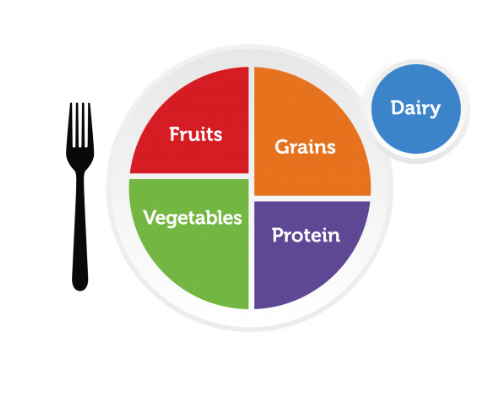
MyPlate is a colorful plate icon that represents the five main food groups you should include in your meals: fruits, vegetables, grains, protein, and dairy. It replaced the old food pyramid in 2011 to give people a clearer, more realistic way to think about what to include on their plate.
First, imagine your plate divided into four sections, which include fruits, vegetables, grains, and protein, with a side of dairy. Each section represents a portion of your meal, helping you see how much of each food group you should aim for. It’s not about perfection, as it’s more about balance.
The MyPlate Plan tool on the website provides a more detailed and personalized breakdown of calories and serving sizes, tailored to your age, sex, height, weight, and activity level. It outlines the recommended daily intake for each food group and provides practical examples to help you meet your nutritional goals.
Here’s a quick breakdown of each food group and how they fit into your plate:
Vegetables are full of vitamins, minerals, fiber, and antioxidants. Try to include a variety of types and colors that include dark leafy greens, carrots, bell peppers, broccoli, or beets. Vegetables that come fresh, frozen, or canned all count.
Tip: Roast, steam, or sauté your veggies with a little olive oil for flavor and texture. Also, look at the packaging to avoid any that have excess salt.
Fruits are naturally sweet and packed with nutrients like vitamin C, potassium, and fiber. Berries, apples, oranges, bananas, and melons are all great choices.
Tip: Add sliced fruit to salads, yogurt, or oatmeal for extra flavor.
Grains give your body energy. Choose whole grains most of the time, like brown rice, whole wheat pasta, oatmeal, or quinoa, because they contain more fiber and nutrients than the simple/refined grains.
Tip: Look for “100% whole grain” on labels when buying bread or crackers.
Protein helps build and repair your body. Good sources include lean meats, poultry, seafood, eggs, beans, tofu, lentils, and nuts.
Tip: Include plant-based proteins a few times a week, like beans, lentils, tofu, or nuts, to add variety and fiber to your meals. They’re affordable, filling, and great for heart health.
Dairy provides calcium, vitamin D, and protein. This could be a glass of low-fat milk, a serving of yogurt, or a small slice of cheese. If you’re lactose intolerant or prefer non-dairy options, look for fortified soy or almond milk.
Tip: Choose low-fat or fat-free dairy options to reduce saturated fat intake.
Using MyPlate at home or while eating out can be very easy. Just think about your plate in sections and aim to include most of the food groups. Here are a few examples of how to do it:
Example 1: Weeknight Dinner
Example 2: Vegetarian Lunch
Example 3: Breakfast
You don’t need to get it perfect every time. Just by making an effort to include a variety of food groups, you can make a significant difference in your overall health.
Following the MyPlate model can help you:
It also helps with portion control and reduces the temptation to overeat certain foods, like large portions of meat or too many refined carbs.
Healthy eating doesn’t need to be overwhelming. MyPlate offers a practical and visual way to take small steps toward better nutrition. Whether you’re cooking at home or grabbing takeout, you can use this guide to build meals that support your health goals.
Start by choosing just one meal today to build using the MyPlate model, and you might be surprised how easy and satisfying it is.
References
U.S. Department of Agriculture. (2020). MyPlate.
U.S. Department of Agriculture & U.S. Department of Health and Human Services. (2020). Dietary Guidelines for Americans, 2020–2025 (9th ed.).
Last updated: February 5, 2026
AZ Dietitians offers in-person and virtual appointments for Arizona clients. Now offering telehealth services for clients in Colorado, Utah, and California.
You've probably already heard of GLP-1 medications like Ozempic taking over the market. However, there is a new and...

Fasting can affect women differently depending on factors like age, activity level, hormonal health, and reproductive status. Learn what research says about intermittent fasting, PCOS, menstrual health, bone density, and more.
Could the ultra-processed foods you eat regularly be affecting your brain health? Learn about the potential connections between ultra-processed foods, memory, mood, inflammation, and cognitive health, along with simple ways to make more nutritious choices.

Wondering what to eat after gallbladder removal? Learn how your diet may need to change after surgery and get practical tips for supporting digestion as your body adjusts.