What is Berberine?
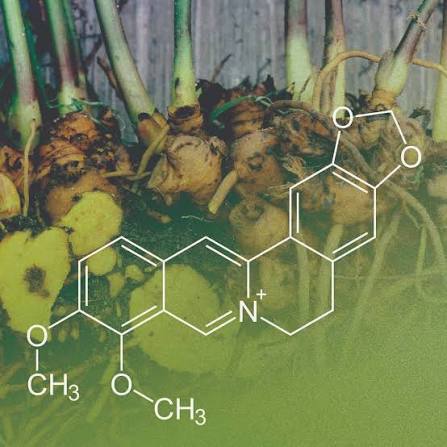
Berberine is a compound found in several naturally occurring plants and has a wide range of studies on its effects as a supplement. In this blog, we will be covering specific studies on berberine and its effect on insulin resistance. To learn more about the origin story, background of berberine, and some of the other benefits, refer to this blog post: Berberine: Miracle Supplement or Overhyped Wellness Trend?
What is Insulin Resistance?
Insulin is a hormone that acts like a key for sugar to enter cells. When you eat, sugar enters your bloodstream, and insulin responds by unlocking cells so that sugar can go inside and be burned for energy.
Insulin resistance happens when the “locks” on your cells don’t work as well. This doesn’t allow for sugar to enter cells and keeps them stuck outside in the bloodstream. The body then starts to panic and pumps extra insulin to try and force the doors open. This creates a traffic jam of high blood sugar and high levels of insulin with nowhere to go. To clear the blood, your body is forced to store that extra sugar as fat.
Learn more: Fiber’s Effect on Insulin Resistance
How is Berberine Involved with Insulin Resistance?
When the cells are unable to get enough energy due to insulin resistance, berberine steps in. It flips an “emergency switch” deep inside the cell that opens the back door. This allows the stuck sugar in your bloodstream to bypass the broken locks and enter the cell without needing an insulin key at all. This switch also triggers your body to burn stored fat for extra energy. Your blood sugar stabilizes and fat storage decreases (2, 5).
It’s important to note that trying to achieve these same benefits in individuals with no insulin resistance showed no effect on decreasing sugar and fat within the body (3). You can’t fix a lock that isn’t broken!
Appropriate Dosages of Berberine
The dosages of berberine have been inconsistent in studies, so it’s difficult to be certain what the “clinically recommended” dosage for berberine is. When it comes to insulin resistance, most studies focused on 500 mg 2-3 times a day, 300 mg 3 times a day, and 1000 mg once a day (1, 2). However, a brand called HIMABERB® was clinically tested on prediabetic patients in 2023, taking 500 mg 3 times a day. This study revealed that berberine supplementation helped patients reverse their prediabetic stage and return their blood sugar levels and insulin sensitivity back to normal. Only a very few patients had side effects of stomach discomfort with this dosage (4).
Because less than 1% of standard berberine is actually absorbed into the bloodstream, early studies tried increasing dosages to increase its benefits. However, this caused more side effects of stomach issues, such as nausea and diarrhea. A study from 2022 aimed to find a solution to this issue and tested a different type of berberine, called dihydroberberine. These researchers compared the two compounds and found that dihydroberberine is much better absorbed into the bloodstream. However, side effects of stomach discomfort were still present, and more research is needed to confirm dosage safety and efficacy for insulin resistance (3).
References
(1) Guo, J., Chen, H., Zhang, X., Lou, W., Zhang, P., Qiu, Y., Zhang, C., Wang, Y., & Liu, W. J. (2021). The effect of berberine on metabolic profiles in type 2 diabetic patients: A systematic review and meta-analysis of randomized controlled trials. Oxidative Medicine and Cellular Longevity, 2021, Article 2074610. https://doi.org/10.1155/2021/2074610
(2) He, Q., Dong, H., Guo, Y., Gong, M., Xia, Q., Lu, F., & Wang, D. (2022). Multi-target regulation of intestinal microbiota by berberine to improve type 2 diabetes mellitus. Frontiers in Endocrinology, 13, Article 1074348. https://doi.org/10.3389/fendo.2022.1074348
(3) Moon, J. M., Ratliff, K. M., Hagele, A. M., Stecker, R. A., Mumford, P. W., & Kerksick, C. M. (2022). Absorption Kinetics of Berberine and Dihydroberberine and Their Impact on Glycemia: A Randomized, Controlled, Crossover Pilot Trial. Nutrients, 14(1), 124. https://doi.org/10.3390/nu14010124
(4) Panigrahi, A., & Mohanty, S. (2023). Efficacy and safety of HIMABERB® Berberine on glycemic control in patients with prediabetes: Double-blind, placebo-controlled, and randomized pilot trial. BMC Endocrine Disorders, 23, Article 190. https://doi.org/10.1186/s12902-023-01442-y
(5) Ye, Y., Liu, X., Wu, N., Han, Y., Wang, J., Yu, Y., & Chen, Q. (2021). Efficacy and safety of berberine alone for several metabolic disorders: A systematic review and meta-analysis of randomized clinical trials. Frontiers in Pharmacology, 12, Article 653887. https://doi.org/10.3389/fphar.2021.653887