
Retatrutide Peptide
You've probably already heard of GLP-1 medications like Ozempic taking over the market. However, there is a new and...

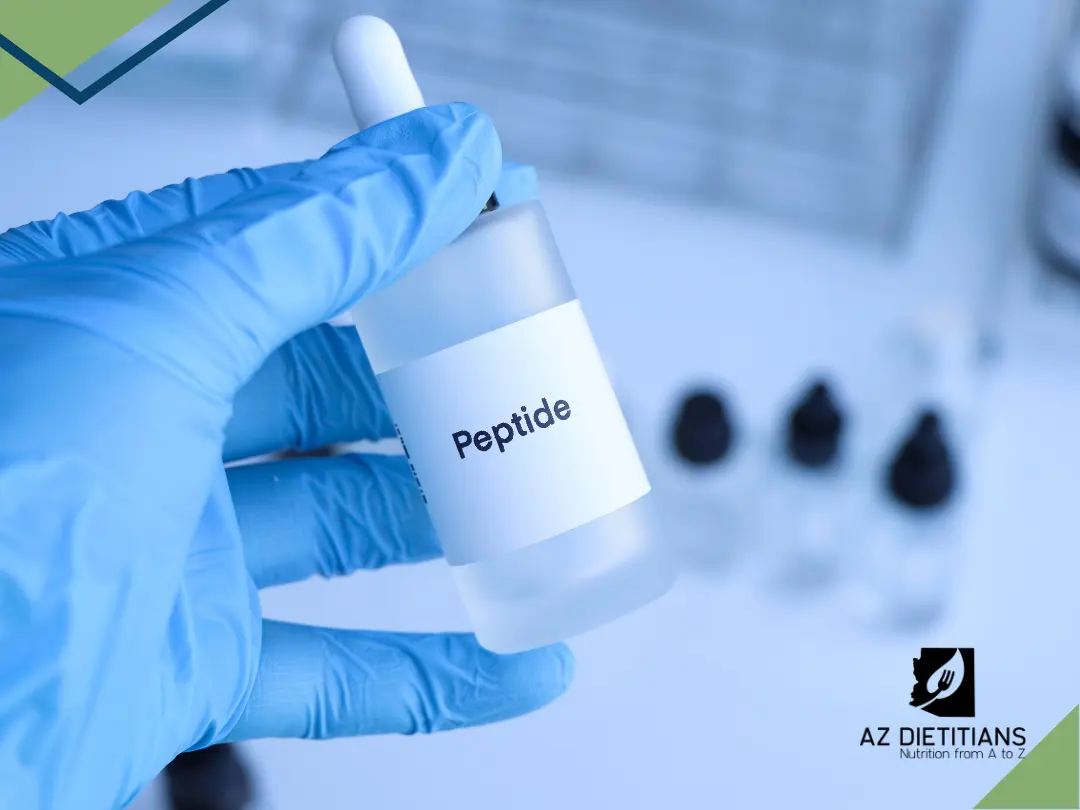
Last updated: February 26, 2026
Peptides have been gaining attention and are heavily marketed to a wide range of populations. You may see them promoted in skin care, injectables, supplements, and more. By looking at evidence-based research, we can uncover what peptides are, their potential benefits, and how to approach them safely.
In general, peptides are short chains of amino acids. Therapeutic peptides that are discussed for potential health benefits are often described as pharmaceutical agents containing a specific sequence of amino acids.
Fun Facts:
Insulin, a peptide hormone made of 51 amino acids, became the first commercial peptide drug in 1923.
Since insulin’s monumental impact, peptide research has expanded rapidly.
Semaglutide, a GLP-1 receptor agonist, was approved in 2017 for managing type 2 diabetes and blood glucose levels.
Animals, plants, fungi, and bacteria can produce bioactive peptides that may have applications for human health. For example, components of snake venom have been studied for wound healing and neuropathy.
Commonly Marketed Peptides
Peptides are often promoted as “popular among athletes,” “anti-aging,” or “regenerative.” It’s important to approach these claims with caution.
First and foremost, always consult your healthcare provider and research both the company and the specific type of peptide you are considering.

Peptides are sometimes advertised for athletic recovery and performance. Your body does use amino acids to help repair, rebuild, and recover muscle. However, most injectables marketed for performance, anti-aging, or other appealing benefits are not FDA approved and may not be legal without a prescription. Not being FDA approved means there is no guarantee of product quality, safety, or effectiveness.
Peptides used in cosmetic products from reputable suppliers have been shown to stimulate cells that increase collagen production and skin elasticity, relax facial muscles, and help preserve skin integrity.
Collagen peptides may enhance skin and joint health, decrease fat mass, increase muscle strength, and even have antihypertensive effects.
Peptides are being explored in cancer care, both for prevention and treatment, as research continues to investigate their potential applications.
GLP-1 receptor agonists are peptide-based medications primarily used for type 2 diabetes and weight management. These peptides can reduce appetite, improve blood glucose control, slow digestion, and increase insulin secretion.
If peptide prescriptions are not appropriate or desired, lifestyle and nutrition strategies can support similar physiological pathways:
Hydrolyzed Casein Protein: Broken down into smaller peptides for easier absorption; may help manage obesity and metabolic syndrome by supporting energy balance.
Fiber: Helps stabilize blood glucose, increase satiety, and naturally stimulates GLP-1 release in the gut.
Protein: Supports metabolic rate, muscle repair, recovery, and preserves lean muscle mass.
Sleep: Supports growth hormone release, tissue repair, and overall cellular function.
If you see a peptide trending on social media or being marketed online:
Check whether it is FDA approved.
Be cautious of exaggerated or unverified claims.
Discuss potential risks and benefits with your physician or healthcare team.
Resources
Wang, L., Wang, N., Zhang, W., Cheng, X., Yan, Z., Shao, G., Wang, X., Wang, R., & Fu, C. (2022). Therapeutic peptides: current applications and future directions. Signal transduction and targeted therapy, 7(1), 48. https://doi.org/10.1038/s41392-022-00904-4
Eichner, A. (2025). Why athletes should steer clear of online peptides. USATF. https://www.usatf.org/campus/articles/2025/why-athletes-should-steer-clear-of-online-peptides
Pintea, A., Manea, A., Pintea, C., Vlad, R. A., Bîrsan, M., Antonoaea, P., Rédai, E. M., & Ciurba, A. (2025). Peptides: Emerging Candidates for the Prevention and Treatment of Skin Senescence: A Review. Biomolecules, 15(1), 88. https://doi.org/10.3390/biom15010088
Zakir, S. K., Jawed, B., Esposito, J. E., Kanwal, R., Pulcini, R., Martinotti, R., Ceci, E., Botteghi, M., Gaudio, F., Toniato, E., & Martinotti, S. (2025). The Role of Peptides in Nutrition: Insights into Metabolic, Musculoskeletal, and Behavioral Health: A Systematic Review. International journal of molecular sciences, 26(13), 6043. https://doi.org/10.3390/ijms26136043
Last updated: February 26, 2026
AZ Dietitians offers in-person and virtual appointments for Arizona clients. Now offering telehealth services for clients in Colorado, Utah, and California.
You've probably already heard of GLP-1 medications like Ozempic taking over the market. However, there is a new and...

Fasting can affect women differently depending on factors like age, activity level, hormonal health, and reproductive status. Learn what research says about intermittent fasting, PCOS, menstrual health, bone density, and more.

Could the ultra-processed foods you eat regularly be affecting your brain health? Learn about the potential connections between ultra-processed foods, memory, mood, inflammation, and cognitive health, along with simple ways to make more nutritious choices.

Wondering what to eat after gallbladder removal? Learn how your diet may need to change after surgery and get practical tips for supporting digestion as your body adjusts.