Inositol and PMOS
Polyendocrine Metabolic Ovarian Syndrome (PMOS), formerly known as PCOS, can be tricky to manage because of how complex the condition is. You might’ve heard of so many different diets, medications, and supplements that people online, or even doctors, tell you that you need if you have PMOS. And maybe you might’ve heard about inositol supplementation.
It can be hard to know where to start with such a complex disorder, especially with the media pushing so many products. It’s important to know the science behind the disorder and the product you’re trusting to help maintain your health to truly know how effective it is. So, let’s dive into a widely researched supplement for managing PMOS symptoms, called inositol. But before we do that, first things first …
What is PMOS?
In a nutshell, PMOS is the most common hormonal imbalance seen in reproductive-aged women. It is a complex condition that often involves high blood sugar levels and can affect a woman’s cycle and fertility. Common physical symptoms that some people may experience are:
- Irregular menstrual cycles
- Weight gain
- Infertility
- Pregnancy complications
- Mental health disorders such as anxiety and depression
- Excess stiff, dark hair growth on areas such as the face, neck, chest, and abdomen
- Acne
- Oily skin
Like I said, PMOS is so complex that symptoms show up differently for each person. Health professionals even divide PMOS into different subgroups so that we can understand it better and tailor treatments more accurately based on symptoms (1, 4). That’s why you often hear that what works for one person doesn’t work for another.
High blood sugar levels are common in people with PMOS because the body struggles to use a hormone called insulin correctly (a condition known as insulin resistance). Because your metabolism relies heavily on hormones, a condition rooted in hormone imbalance makes it much harder for the body to regulate energy, weight, and even blood pressure (4).
What is Inositol?
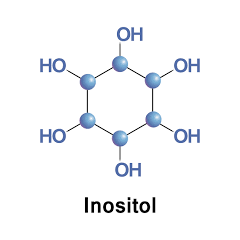
Inositol is a natural compound closely related to carbohydrates, found in plant foods like beans, nuts, and fruits. But unlike regular carbs, it does not spike your blood sugar. Your body also makes it naturally to help regulate hormones, blood sugar, nerve function, and brain health.
There are two main types of inositols your body uses: Myo-inositol and D-chiro-inositol. In a healthy body, these two types exist in the blood at a very specific ratio of 40:1. However, in women with specific types of PMOS, specifically those dealing with high testosterone levels, the ratio is imbalanced (2). This imbalanced ratio is heavily linked to insulin resistance, meaning the body struggles to control blood sugar levels (3).
When you take an inositol supplement, it acts as a messenger that helps your cells “hear” insulin better. This helps your body lower blood sugar levels naturally. It also targets the specific ovarian hormones that are imbalanced in PMOS. Clinical reviews show that inositol can effectively lower fasting insulin and testosterone, and it can even help restore ovulation and improve fertility outcomes (2, 3).
Inositol Dosage and Considerations
Although the evidence for inositol is very promising, there are still limitations to the research. Because it is a natural supplement and not a prescription medication, scientists are still studying it. Many studies have used different doses and tracked patients for short periods, meaning we need longer studies to see the full picture.
Currently, the clinical data suggests that taking a supplement that perfectly matches the body’s natural 40:1 ratio of Myo-Inositol to D-Chiro-inositol provides the best metabolic benefits (2, 3).
Finally, as mentioned earlier, PMOS shows up differently for everyone. Because inositol specifically targets insulin and specific hormone imbalances, it will only benefit certain types of PMOS. You should always consult with your healthcare provider to find out if your specific PMOS symptoms make you a good candidate for this supplement (1).
References
(1) Fedeli, V., Catizone, A., Querqui, A., Unfer, V., & Bizzarri, M. (2023). The Role of Inositols in the Hyperandrogenic Phenotypes of PCOS: A Re-Reading of Larner’s Results. International Journal of Molecular Sciences, 24(7), 6296. https://doi.org/10.3390/ijms24076296
(2) Lete, I., Martínez, A., Lasaga, I., Centurión, E., & Vesga, A. (2024). Update on the combination of myo-inositol/d-chiro-inositol for the treatment of polycystic ovary syndrome. Gynecological Endocrinology, 40(1), 2301554. https://doi.org/10.1080/09513590.2023.2301554
(3) Mohamedh, A., Badawy, A., & Fahmy, S. S. E. (2025). Inositols in polycystic ovary syndrome: A comprehensive review. Aswan Africa Obstetrics & Gynecology Journal, 1(3), 129–144.
(4) Roy, A. (Ed.). (2023). Polycystic ovarian syndrome (pcos) and our biological clock. Nova Science Publishers, Incorporated.
Written By: AZ Dietitians
Published: August 24, 2026