Retatrutide Peptide
You've probably already heard of GLP-1 medications like Ozempic taking over the market. However, there is a new and...

Last updated: March 11, 2026
If you’ve ever felt caught in a loop of overeating, guilt, restriction and then repeating the cycle, you’re not alone. The binge-restrict cycle is incredibly common, and incredibly frustrating. Whether you’re trying to nourish your body, support your mental health, or just make peace with food, the first step is understanding what’s really going on beneath the surface.
Let’s explore what binge eating really is, why it happens, and how balanced, consistent meals can be a powerful part of the healing process.
The cycle usually looks something like this:
This isn’t all about willpower, its biology and psychology at work.
Binge eating involves eating an unusually large amount of food in a short time with a feeling of being out of control. It’s often driven by a mix of physical deprivation and emotional distress, not just cravings.
It’s important to note that binge eating is not the same as simply overeating. It’s not eating “too much” on a holiday. It’s a response to unmet needs, physical, emotional, or both.
Biological reasons:
Psychological and emotional reasons:
Environmental triggers:
The Brain:
The Body:
Over time, chronic binging can lead to digestive issues, hormonal imbalances, and emotional exhaustion.
Balanced, consistent meals are one of the most effective ways to reduce binge urges. Here’s why:
A balanced plate includes:
Even snacks matter! Try pairing proteins and carbs together like apples and peanut butter, crackers and hummus, or cheese and nuts.
Balanced eating isn’t just about nutrients, it’s about breaking free from the cycles that keep you stuck. Your body is not the problem. You can’t shame yourself into healing. You don’t need more rules. You need more trust, more nourishment, and more self-compassion.
References
De Young, K. P., Lavender, J. M., Crosby, R. D., Wonderlich, S. A., Engel, S. G., Mitchell, J. E.,
Crow, S. J., Peterson, C. B., & Le Grange, D. (2014). Bidirectional associations between binge eating and restriction in anorexia nervosa. An ecological momentary assessment study. Appetite, 83, 69–74.
Mathes, W. F., Brownley, K. A., Mo, X., & Bulik, C. M. (2009). The Biology of Binge Eating. Appetite, 52(3), 545–553.
Last updated: March 11, 2026
AZ Dietitians offers in-person and virtual appointments for Arizona clients. Now offering telehealth services for clients in Colorado, Utah, and California.
You've probably already heard of GLP-1 medications like Ozempic taking over the market. However, there is a new and...
Fasting can affect women differently depending on factors like age, activity level, hormonal health, and reproductive status. Learn what research says about intermittent fasting, PCOS, menstrual health, bone density, and more.
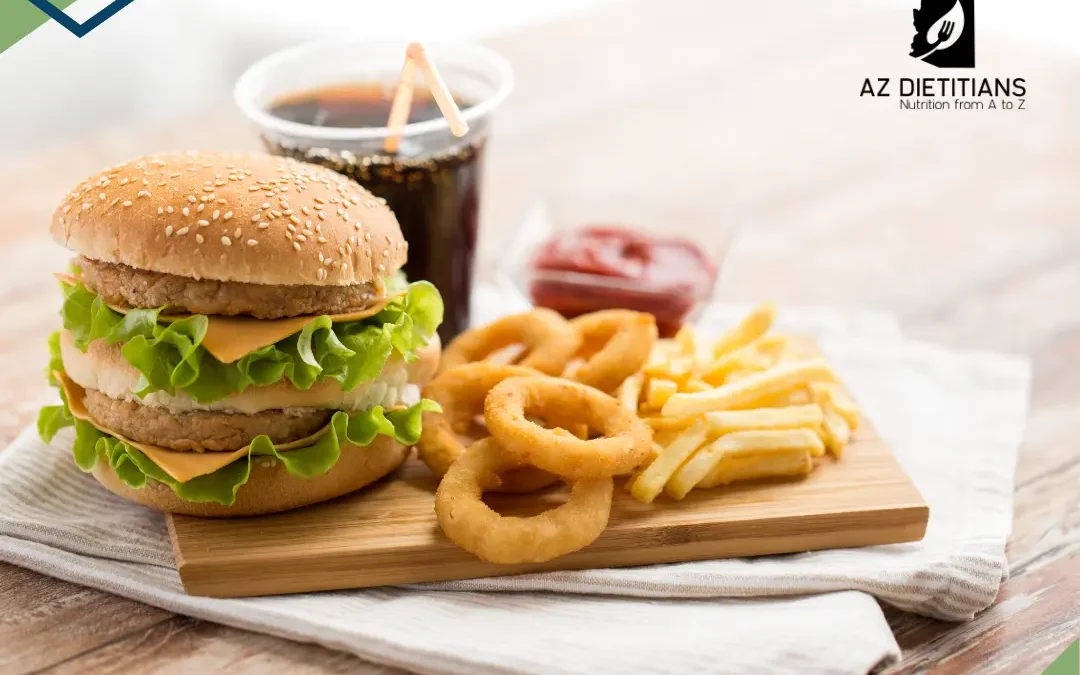
Could the ultra-processed foods you eat regularly be affecting your brain health? Learn about the potential connections between ultra-processed foods, memory, mood, inflammation, and cognitive health, along with simple ways to make more nutritious choices.

Wondering what to eat after gallbladder removal? Learn how your diet may need to change after surgery and get practical tips for supporting digestion as your body adjusts.