Understanding The B Vitamins
by AZ Dietitians | 10/12/26
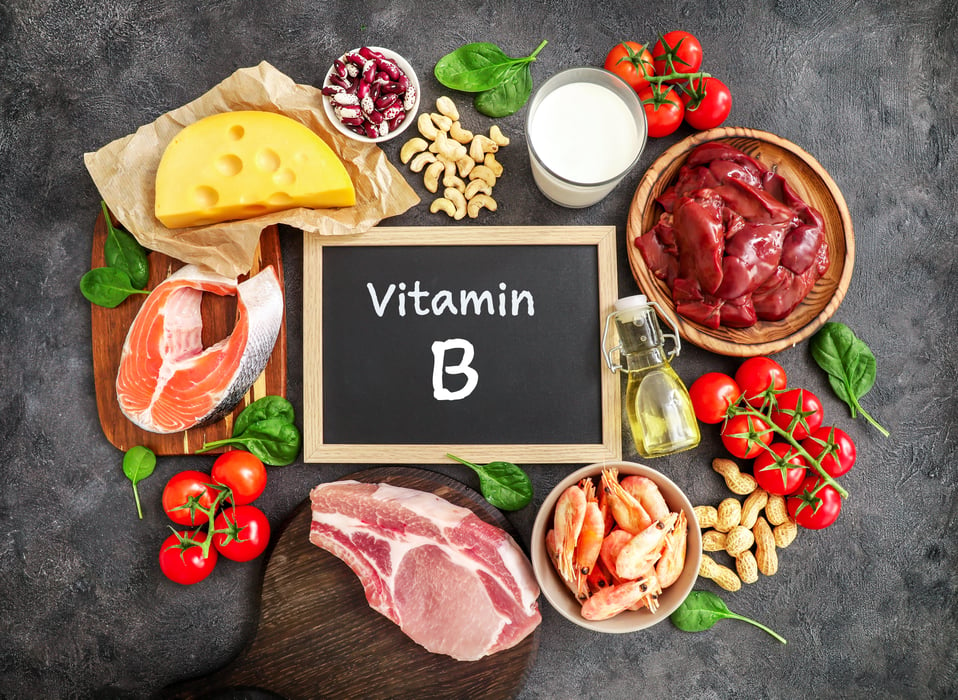
Ever wonder why there is so much emphasis on making sure we get all our B vitamins? Well, that’s because these vitamins play very important roles in producing energy for the body, regulating our metabolism, and influencing how we feel each day. Each vitamin plays a very important role, and some even work together to support other functions! Let’s dive into where each vitamin comes from and their roles.
Thiamine (B1)
Food sources rich in thiamine are pork, whole grains, fish, and yeast. It’s also found in fortified and processed foods such as dairy products, cereal, bread, and infant formulas. Once it’s absorbed into your body, it needs magnesium as a key to activate. One of the main functions of the active form of thiamine is to help the body convert the carbohydrates you eat into energy. It also supports the communication from the nervous system to the brain to activate muscle movement, heart rate, breathing, and more (1).
Riboflavin (B2)
Food sources that contain riboflavin are eggs, dairy products, green vegetables, meat, mushrooms, and almonds. In the United States, it’s also added to certain grains such as rice, corn, and flour (1). Once absorbed into the body and activated, it helps turn carbohydrates, proteins, and fats into energy (1,2) and serves as a protective antioxidant for the cells in your body (1).
Niacin (B3)
Niacin is found in plant foods such as soy, nuts, seeds, legumes, and grains and is added to bread, cereals, and infant formulas. A specific amino acid called tryptophan, which is a building block for proteins, can also be converted into niacin when absorbed into the body. Therefore, animal protein sources, such as dairy products and meat, are also considered dietary sources of niacin. In the body, niacin supports the conversion of food into energy and also has the ability to help the body increase the “good” cholesterol (HDL) and lower the “bad” cholesterol (LDL) (1,2).
Pantothenic Acid (B5)
Pantothenic acid is easily found in most foods, including animal proteins such as eggs, fish, animal meats, and dairy products, and in plant sources such as mushrooms, avocados, sunflower seeds, sweet potatoes, tomatoes, broccoli, legumes, and lentils. It’s also added to certain foods such as cereal and infant formulas. Pantothenic acid helps the body produce a very specific enzyme, called coenzyme A or CoA, which is needed for the body to build and break down fatty acids and cholesterol (1,2).
Pyridoxine (B6)
Food sources of pyridoxine are beef, poultry, starchy vegetables like potatoes and squash, and non-citrus fruits like bananas and avocados. Pyridoxine can be added to cereals as well. When absorbed and activated by the body, it supports the function of a wide variety of enzymes. These include protein, carbohydrate, and fat metabolism, and it supports the immune system and nerve function. It could also help the brain produce happy chemicals like serotonin and dopamine (1).
Biotin (B7)
Biotin is naturally found in organ meats such as chicken or beef liver, fish, eggs, soybeans, seeds, and nuts. It helps cells grow, communicate, and function properly and supports the conversion of the food you eat into energy (1). You might have heard of biotin as a supplement that helps with healthy hair, skin, and nails. Although true, supplementing biotin only provides those benefits if you are low or do not get enough biotin from your diet. Large doses have not been shown to have any toxic effects; however, they can interfere with accurate readings on certain lab tests, such as thyroid function tests and vitamin D tests (1).
Folate (B9)
Folate is naturally found in various foods but is highest in leafy greens, brussels sprouts, nuts, beans, grains, dairy products, meat, and poultry. It helps support the body in producing DNA and red blood cells. Low amounts of folate within the body can cause folate-related anemia (1).
Cobalamin (B12)
Cobalamin is naturally found in animal products such as meat, dairy products, and eggs, and it can also be added to some foods. The acid in your stomach helps break down the animal proteins to help release the cobalamin from the food so that your body can absorb it. Once absorbed into your body, it helps the body create red blood cells and DNA, and it protects nerve cells. Because of its role in creating red blood cells, low amounts of cobalamin can cause a B12-related anemia (1).
References
(1) Hanna, M., Jaqua, E., Nguyen, V., & Clay, J. (2022). B vitamins: Functions and uses in medicine. The Permanente Journal, 26(2), Article 21.204. https://doi.org/10.7812/TPP/21.204
(2) Hrubša, M., Siatka, T., Nejmanová, I., Vopršalová, M., Kujovská Krčmová, L., Matoušová, K., Javorská, L., Macáková, K., Mercolini, L., Remião, F., Máťuš, M., Mladěnka, P., & on behalf of the OEMONOM. (2022). Biological Properties of Vitamins of the B-Complex, Part 1: Vitamins B1, B2, B3, and B5. Nutrients, 14(3), 484. https://doi.org/10.3390/nu14030484