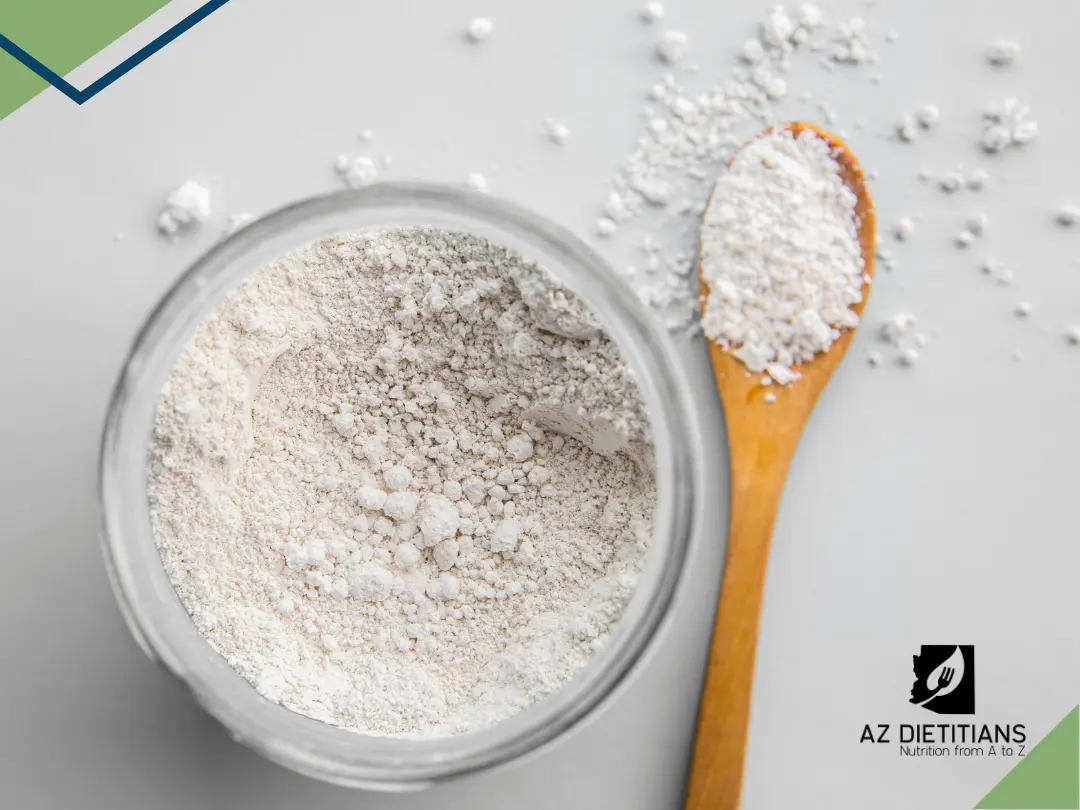
Diatoms are a type of microscopic, single-celled algae found in oceans, freshwater, and damp surfaces. They are known for their unique cell walls made of silica, which is a glass-like substance, that form intricate and symmetrical patterns. Over millions of years, the fossilized remains of diatoms have accumulated in sedimentary deposits, forming a soft, powdery substance known as diatomaceous earth (DE). DE is marketed as a supplement for lowering cholesterol, detoxing aluminum, treating parasites, and even used as an insecticide. Many anecdotal claims have been made on the health benefits of DE supplementation, including improved energy levels, feeling and looking younger, and improvements in oral hygiene. But when you examine the research closely, most of these claims remain unsupported by the medical and scientific communities. Below, we’ll explore each area, including potential benefits, limitations, and safety concerns.
What Current Research Says About Diatomaceous Earth Supplementation
Impact of Diatomaceous Earth on Cholesterol
There have not been sufficient studies that support DE as a treatment for high cholesterol. Most studies have only been conducted in livestock populations, except for one small human trial. In this trial, 19 adults with moderately elevated cholesterol took 250 mg of food-grade DE three times daily for eight weeks. There was an observed 13% drop in total cholesterol, with LDL (“bad”) and triglycerides also declining. HDL (“good”) cholesterol rose slightly. However, the study lacked a placebo group or randomization, making it hard to attribute results to DE supplementation alone. A potential confounding variable is that the participants, already being eager to lower their cholesterol, may have also improved their dietary choices throughout the duration of the study, which led to a decrease in cholesterol. Since then, no follow-up studies have replicated these findings.
Can DE Supplementation Help with Aluminum Detox?
While there is solid evidence that oligomeric, soluble forms of silica can reduce gastrointestinal aluminum absorption in humans, no human research supports the idea that DE does the same. Food‑grade DE contains amorphous, insoluble silica, which is not shown to reduce aluminum absorption in controlled human trials. For those seeking validated options, silicon-rich water, dietary silica, or defined supplements like MMST and stabilized orthosilicic acid have been shown to slightly reduce aluminum levels.
Diatomaceous Earth Used for Parasite Treatment or as an Insecticide
DE kills insects by dehydrating them when applied as a dust. This is why it’s widely used as an agricultural or home pesticide. In several animal trials (e.g., cattle, goats, poultry), DE administration was inconclusive; some studies reported decreased levels of mites when livestock were supplemented with DE, while others showed little or no effect on internal parasites compared to standard treatments or control groups. Therefore, traditional anti-parasitic methods should continue to be relied on and used.
Safety Risks and Irritation Potential with DE Supplementation
Food-grade DE passes through the digestive tract mostly unchanged and does not absorb into the bloodstream. However, use caution when handling DE, as inhaling DE dust, even in food-grade versions, may cause respiratory irritation, lung scarring, or silicosis over long-term exposure. Given its abrasive nature, caution is advised when handling it.
Final Thoughts – Does Research Support Diatomaceous Earth Supplementation?
A 2023 review by Mwangi highlights several potential health benefits of DE, including cholesterol reduction, aluminum detoxification, and support for skin and bone health. While the review brings attention to interesting areas of research, many of the claims are based on early or indirect evidence, such as small human studies or in vitro findings. Some conclusions extend beyond the available data, particularly when applying research on bioavailable forms of silica to DE, which is largely insoluble and minimally absorbed. Overall, the review provides a helpful starting point for exploring DE’s potential, but it remains overly optimistic about DE supplementation, and more rigorous clinical research is needed to fully support its use as a health supplement.
At present, human research on DE supplementation is almost entirely anecdotal. While preliminary findings in cholesterol lowering and aluminum binding are intriguing, they stem from uncontrolled, small-scale studies. Claims that DE treats parasites or provides detox benefits are not verifiable by clinical evidence in humans. Much of the appeal comes from testimonials and animal data, not able to be sufficiently translatable to the broader human population.
While current research doesn’t strongly support the effectiveness of DE, that doesn’t mean it has no effect or that personal experiences with it are invalid. Everyone’s body is different, and responses to supplements can vary. If you’re thinking about trying DE, choose only verified food-grade products, avoid inhaling the powder, and speak with a healthcare provider, especially if you have respiratory issues or take medications. For managing cholesterol, focus on proven methods like increasing soluble fiber and making heart-healthy dietary changes. And when it comes to reducing aluminum exposure, drinking silicon-rich water and eating whole foods are currently better-supported strategies than using DE.
References
Bennett, D. C., Yee, A., Rhee, Y. J., & Cheng, K. M. (2011). Effect of diatomaceous earth on parasite load, egg production, and egg quality of free-range organic laying hens. Poultry science, 90(7), 1416–1426.
Domingo, J. L., Gómez, M., & Colomina, M. T. (2011). Oral silicon supplementation: an effective therapy for preventing oral aluminum absorption and retention in mammals. Nutrition reviews, 69(1), 41–51.
Mthi, S., Ikusika, O. O., Washaya, S., Mpendulo, C. T., & Nowers, C. B. (2024). Growth performance and nematode infestation in grazing lambs: Impact of diatomaceous earth. Journal of Animal Health and Production, 12(2), 165–172. DOI:
Mwangi, J. (2023). Usage of human diatomaceous earth. Ann Limnol Oceanogr, 8(1), 009-012. DOI: 10.17352/alo.000014
Tello-Velamazán, J., Newbold, J., Edwards, H., & Pachebat, J. (2015). Use of diatomaceous earth as a dietary supplement in organic hens and its effects on parasite load, egg production and egg quality. In WSPA conference. Malaga Spain (pp. 205-213).
Wachter, H., Lechleitner, M., Artner-Dworzak, E., Hausen, A., Jarosch, E., Widner, B., Patsch, J., Pfeiffer, K., & Fuchs, D. (1998). Diatomaceous earth lowers blood cholesterol concentrations. European journal of medical research, 3(4), 211–215.
WebMD. (n.d.). Diatomaceous earth.
Whitley, N. (2016). Does diatomaceous earth have a role in worm control? ACSRPC.