Retatrutide Peptide
You've probably already heard of GLP-1 medications like Ozempic taking over the market. However, there is a new and...


Last updated: February 5, 2026
You may be wondering how, in your deep dive into the field of nutrition and dietetics, you came across a blog focused on gratitude. Surprisingly, the connection between nutrition and gratitude is more profound than you might expect. The mind and gut are deeply interconnected through the gut-brain axis, with signals traveling bidirectionally along the vagus nerve. This means that if your gut is inflamed or imbalanced, your brain will receive distress signals, potentially leading to increased feelings of anxiety and depression. Conversely, if you are experiencing prolonged stress or sadness, your body may produce higher levels of cortisol, a stress hormone that can contribute to gut inflammation and an increase in pathogenic bacteria—symptoms you definitely want to avoid!
However, this relationship works both ways. Just as a negative mental state can disrupt gut health, fostering positive emotions and strong social connections can have beneficial effects. A balanced gut microbiome, achieved through a diverse and nutrient-rich diet, has been associated with fewer mental health symptoms. People who report higher levels of happiness and emotional well-being often experience fewer gastrointestinal disturbances, highlighting the powerful connection between mental and digestive health.
On the scientific side, research supports these observations. A study from Mass General Brigham found that women who suppressed negative emotions had increased levels of Firmicutes bacterium CAG 94 and Ruminococcaceae bacterium D16. While these bacteria are essential for the metabolism of short-chain fatty acids and overall intestinal health, an overabundance has been linked to inflammation and dysbiosis—an imbalance in gut bacteria that can contribute to various health issues. Interestingly, the same study showed that women who actively practiced positive reframing techniques when encountering negative emotions had a healthier balance of these bacteria relative to other strains present in stool samples. This highlights a direct correlation between mood regulation and gut microbiome composition.
So, where does gratitude fit into all of this? Gratitude is the practice of focusing on feelings of thankfulness and appreciation for the positives in life, whether big or small. Numerous studies from esteemed institutions such as Harvard, the University of California, and the University of Pennsylvania have demonstrated that cultivating gratitude is linked to improved well-being and happiness. When we experience joy and appreciation, our bodies release dopamine and oxytocin—hormones associated with pleasure and social bonding. In the gut, the breakdown of these hormones can help reduce inflammation, protect the intestinal barrier, and support the growth of beneficial bacteria. This means that gratitude isn’t just a feel-good practice—it’s a wellness tool that plays a role in digestive and overall health.
Incorporating gratitude into your daily routine doesn’t have to be complicated. Here are a few simple but impactful ways to get started:
So, the next time you find yourself caught up in the stresses of daily life, take a moment to practice gratitude. Not only will it uplift your mood, but it may also contribute to a healthier gut—and a healthier you. Stop and smell the roses; your microbiome will thank you!
Ke, Shanlin et al. “Gut feelings: associations of emotions and emotion regulation with the gut microbiome in women.” (2023). Psychological medicine, 1-10. doi:10.1017/S0033291723000612
Last updated: February 5, 2026
AZ Dietitians offers in-person and virtual appointments for Arizona clients. Now offering telehealth services for clients in Colorado, Utah, and California.
You've probably already heard of GLP-1 medications like Ozempic taking over the market. However, there is a new and...

Fasting can affect women differently depending on factors like age, activity level, hormonal health, and reproductive status. Learn what research says about intermittent fasting, PCOS, menstrual health, bone density, and more.
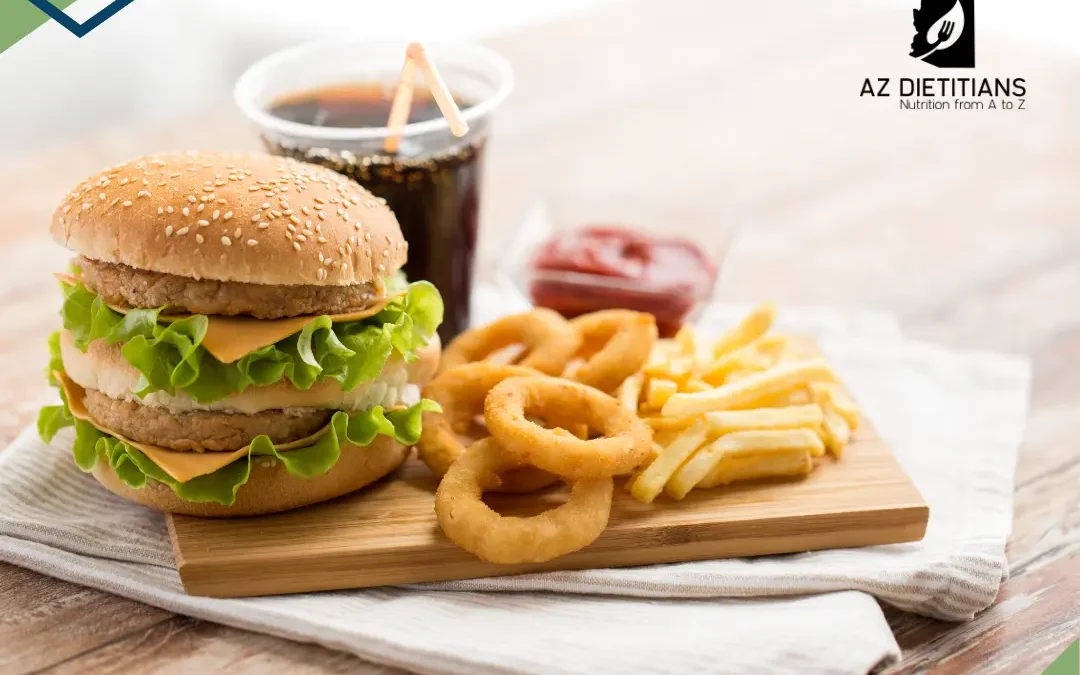
Could the ultra-processed foods you eat regularly be affecting your brain health? Learn about the potential connections between ultra-processed foods, memory, mood, inflammation, and cognitive health, along with simple ways to make more nutritious choices.

Wondering what to eat after gallbladder removal? Learn how your diet may need to change after surgery and get practical tips for supporting digestion as your body adjusts.