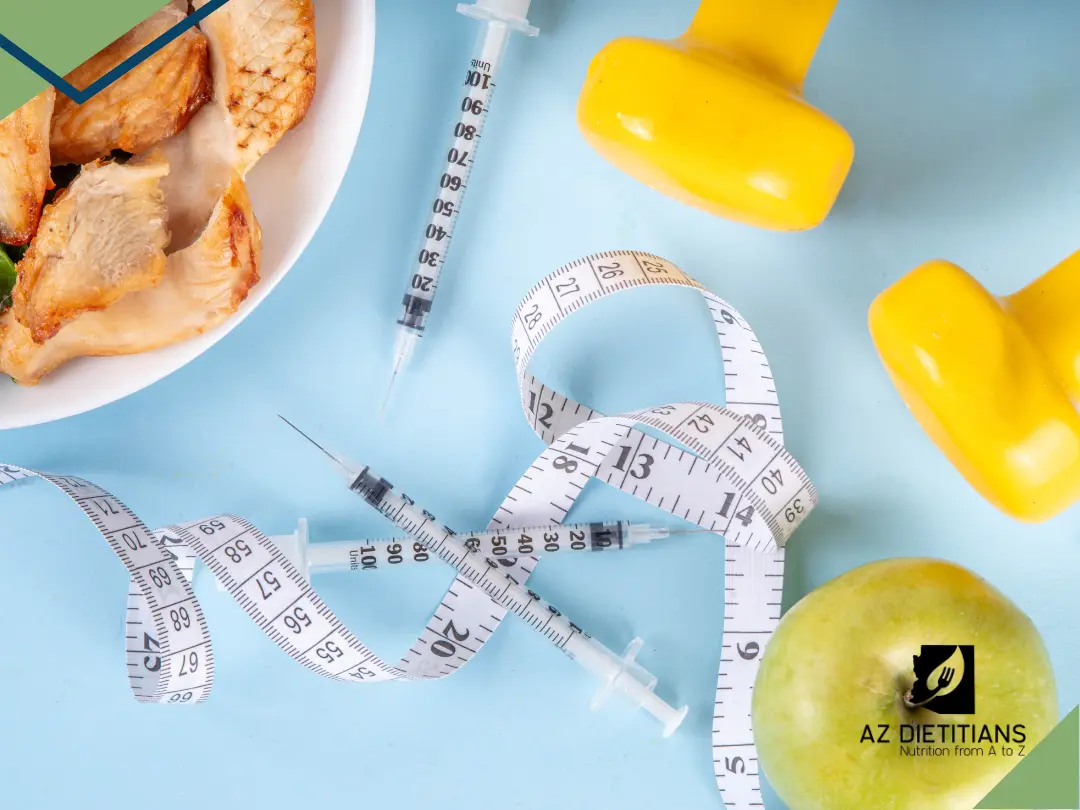
GLP-1 receptor agonist drugs, including semaglutide (Ozempic, Wegovy) and tirzepatide (Mounjaro), have been transforming obesity and type 2 diabetes treatment. GLP-1 drugs work by acting like a natural hormone in your body that helps control blood sugar and hunger. They help your pancreas release insulin when your blood sugar is high and lower another hormone called glucagon, keeping your blood sugar from going up too much. These medicines also slow down how quickly food leaves your stomach, so you feel full longer, and they signal your brain to reduce appetite. Sometimes they even alter cravings, and individuals tend to reduce the amount of ultra-processed foods. This combination of effects helps people eat less, manage their blood sugar better, and often lose weight, making GLP-1 drugs helpful for both diabetes and weight management.
These drugs essentially mimic going on a diet, influencing one’s portion control and how often they eat. Just like a diet, eventually weight will be lost, but a frequent concern is the loss of lean muscle mass during treatment. Let’s break down what the evidence shows and what you can do about it.
The Reality of Lean Mass Loss with GLP-1 Medications
GLP-1 medications don’t only reduce fat as commonly thought. Because one’s appetite is suppressed and energy storage is impacted, there are fewer calories available to maintain the current body weight. Research shows that, on average, about 25% of the weight lost with GLP-1 therapy may come from lean mass. Across other studies, this percentage has ranged widely, from 15% to as high as 60%. For example, specific trials with semaglutide have reported lean mass losses anywhere from 0% to 40% of total weight lost, though fat loss generally outweighs muscle loss, resulting in a higher proportion of lean mass relative to overall body weight. A phase 2 trial found that roughly 35% of the weight loss with semaglutide came from lean mass.
The wide range of muscle loss seen in GLP-1 studies is likely due to differences in how body composition is measured, the type of participants studied, and factors like diet, activity level, and rate of weight loss. People who lose weight quickly, eat less protein, or do little resistance training are more likely to lose a higher proportion of muscle.
Is Muscle Loss an Adaptive Change or Concern?
Lean mass values often include the mass of bone, water, and organs, so it’s not always a direct indicator of muscle loss or function. Emerging research suggests that some lean mass decline may actually be considered adaptive, reflecting improved muscle quality and healthier body composition.
Additionally, a combination therapy of semaglutide and bimagrumab preserved lean mass while boosting fat loss. It was shown that 92.8% of the weight lost was fat, compared to semaglutide alone at 71.8%.
Minimizing Muscle Loss with GLP-1 Medications by Using Evidence-Based Tips
A prospective study of 200 adults on semaglutide or tirzepatide combined with protein-rich meals and resistance training resulted in substantial fat loss, with minimal muscle decline (0.6–1 kg lost). Expert consensus also emphasizes that high protein intake and strength training, alongside GLP-1 therapy, help maintain muscle and bone health.
Preliminary data shows GLP-1 therapy doesn’t lead to more lean mass loss than other weight-loss methods, especially when paired with exercise and nutrition support. It is also important to remember that older adults are especially vulnerable. Combining GLP-1 meds with training and protein is critical to reduce fall risk and preserve strength.
What Patients Should Know About Muscle Loss and GLP-1 Drugs
Losing some muscle during GLP-1–driven weight loss is normal, but it can be minimized. Increasing protein intake and engaging in strength training will be your most effective strategy for maintaining muscle and strength. GLP-1 therapy is powerful for reducing fat and improving metabolic health, but preserving lean mass should not be ignored and should be a treatment goal.
In the future, therapies like bimagrumab may augment GLP-1 drugs to better preserve lean mass American Diabetes Association.
Final Thoughts
GLP-1 medications are game-changers in obesity and diabetes care, but it’s essential to support lean mass during the treatment.
When someone stops taking a GLP-1 medication, the effects on appetite and fullness wear off fairly quickly, even within weeks. Without the added appetite controls, it’s common for hunger to return and old eating patterns to creep back in. Studies show that much of the weight lost on GLP-1 drugs can be regained after stopping them if no lasting lifestyle changes are in place. That’s why it’s important to make gradual, sustainable nutrition changes while on the medication, like eating more protein to preserve muscle, choosing fiber-rich foods to support fullness, and building balanced meals. These habits can help maintain weight loss long term, even without the medication’s effects, and make it less likely for the pounds to return.
References
American Diabetes Association. (2024). New GLP-1 therapies enhance quality of weight loss by improving muscle preservation [Press release]. American Diabetes Association. https://diabetes.org/newsroom/press-releases/new-glp-1-therapies-enhance-quality-weight-loss-improving-muscle-0
Karakasis, P., Patoulias, D., Fragakis, N., & Mantzoros, C. S. (2025). Effect of glucagon-like peptide-1 receptor agonists and co-agonists on body composition: Systematic review and network meta-analysis. Metabolism, 164, 156113. DOI: 10.1016/j.metabol.2024.156113
Karakasis, P., Patoulias, D., Fragakis, N., & Mantzoros, C. S. (2024). A systematic review of the effect of semaglutide on lean mass: insights from clinical trials. Expert Opinion on Pharmacotherapy, 25(5), 611–619. DOI: 10.1080/14656566.2024.2343092
Massachusetts General Hospital. (2025). Preserving lean body mass in patients taking GLP-1 for weight loss. Advances in Motion. https://advances.massgeneral.org/endocrinology/article.aspx?id=1601
Nature Reviews Endocrinology. (2025). Muscle mass loss during GLP-1 receptor agonist therapy prevented with GDF8 and activin A blockade. Nature Reviews Endocrinology, 21, 458. https://doi.org/10.1038/s41574-025-01140-w
Neeland, I. J., Linge, J., & Birkenfeld, A. L. (2024). Effect of glucagon-like peptide-1 receptor agonists in type 2 diabetes. Diabetes, Obesity and Metabolism, 26(4), 16-27. doi:10.1111/dom.15728
Regeneron Pharmaceuticals. (2024). Interim results from ongoing Phase 2 COURAGE trial confirm potential benefits [Press release]. Regeneron Newsroom. https://newsroom.regeneron.com/news-releases/news-release-details/interim-results-ongoing-phase-2-courage-trial-confirm-potential