
The Importance of Breakfast: How Your Morning Meal Can Support Your Health
Breakfast is often called the most important meal of the day, but is there research to support that claim? While...


Last updated: February 5, 2026
Every woman at some point in their life will go through menopause. Menopause is the time that indicates the end of the menstrual cycle, and it is typically diagnosed if a woman goes without a cycle for 12 months (Menopause – Symptoms and Causes – Mayo Clinic, 2023). For most women, menopause can happen between the ages of 40 to 50. With menopause, there are many symptoms that women can experience which include and are not limited to:
These are just some of the symptoms that can be seen, in women that are going through menopause. However, it has been seen that with menopause there can be an increased risk of insulin resistance.
Insulin resistance is when certain cells in the body, like muscles, fat, and liver, do not respond appropriately to insulin. As a result, glucose cannot be removed from your blood. To truly understand what insulin resistance is, you will need to understand how insulin works. Insulin is a hormone that is produced and released from the pancreas and is used to reduce sugar levels in the blood. Insulin is released to act as a key that unlocks cells to allow glucose or sugar to enter the open cell. Once a sufficient amount of sugar is in the cell, insulin will close and lock the cell if an individual is consuming large quantities of carbohydrates or sugars. Certain cells can become less sensitive to insulin so they will not unlock to allow sugar in. This would be considered insulin resistance.
Insulin resistance can have major effects on the body since there is an increase in blood sugar and this can cause issues. The increase in blood sugar can lead to a diagnosis of diabetes when the blood sugar or glucose levels enter the diabetic range. If there is a constant increase in blood sugar over a long period, this can cause damage to the nerves, kidneys, liver, and even blood vessels. When there is an increase in blood glucose or sugar levels in the blood, it can act as little shards of glass in thinner veins or arteries like in the hands, feet, kidneys, and eyes. As a result, this can cause neuropathy or nerve damage, retinopathy or damage to the eye, nephropathy or damage to kidneys due to high blood glucose; as well as many other issues.
There are several different hypotheses proposed on the link between insulin resistance and menopause. Some of these hypotheses include a link between skin temperature and insulin resistance, but the most common hypothesis is the link between a reduced production of certain hormones that can result in an increased risk of insulin resistance. Many of the studies look at the effects of the relationship between decreased estrogen levels which can result in decreased insulin sensitivity or increased insulin resistance.
Bhama, C. V. S., Balaji, S., & Seethalakshmi, A. (2012). Analysis of the degree of insulin resistance in post menopausal women by using skin temperature measurements and fasting insulin and fasting glucose levels: a case control study. Journal of Clinical and Diagnostic Research. https://doi.org/10.7860/jcdr/2012/4377.2646
BridgetChapple. (n.d.). Menopause and diabetes. Diabetes UK. https://www.diabetes.org.uk/guide-to-diabetes/life-with-diabetes/menopause#:~:text=on%20the%20NHS.-,As%20oestrogen%20levels%20fall%2C%20your%20body%20can%20become%20less%20responsive,blood%20sugar%20levels%20or%20HbA1c.
Insulin resistance & prediabetes. (2023, October 30). National Institute of Diabetes and Digestive and Kidney Diseases. https://www.niddk.nih.gov/health-information/diabetes/overview/what-is-diabetes/prediabetes-insulin-resistance#:~:text=Insulin%20resistance%20is%20when%20cells,help%20glucose%20enter%20your%20cells.
Menopause – Symptoms and causes – Mayo Clinic. (2023b, May 25). Mayo Clinic. https://www.mayoclinic.org/diseases-conditions/menopause/symptoms-causes/syc-20353397#:~:text=Menopause%20is%20the%20time%20that,51%20in%20the%20United%20States.
Last updated: February 5, 2026
AZ Dietitians offers in-person and virtual appointments for Arizona clients. Now offering telehealth services for clients in Colorado, Utah, and California.
Breakfast is often called the most important meal of the day, but is there research to support that claim? While...
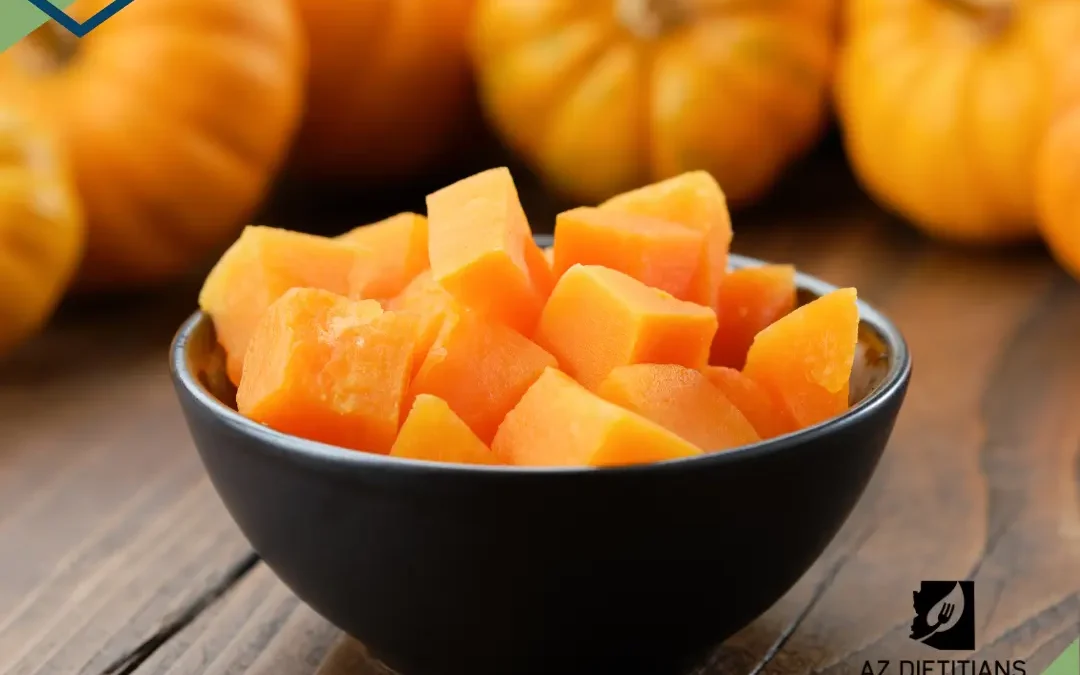
Pumpkin is more than a seasonal favorite! Packed with vitamins, minerals, fiber, and beneficial plant compounds, pumpkin flesh, seeds, and oil offer a variety of nutritional benefits. Discover how pumpkin can support your overall wellness and explore simple ways to enjoy this versatile ingredient in your everyday meals.
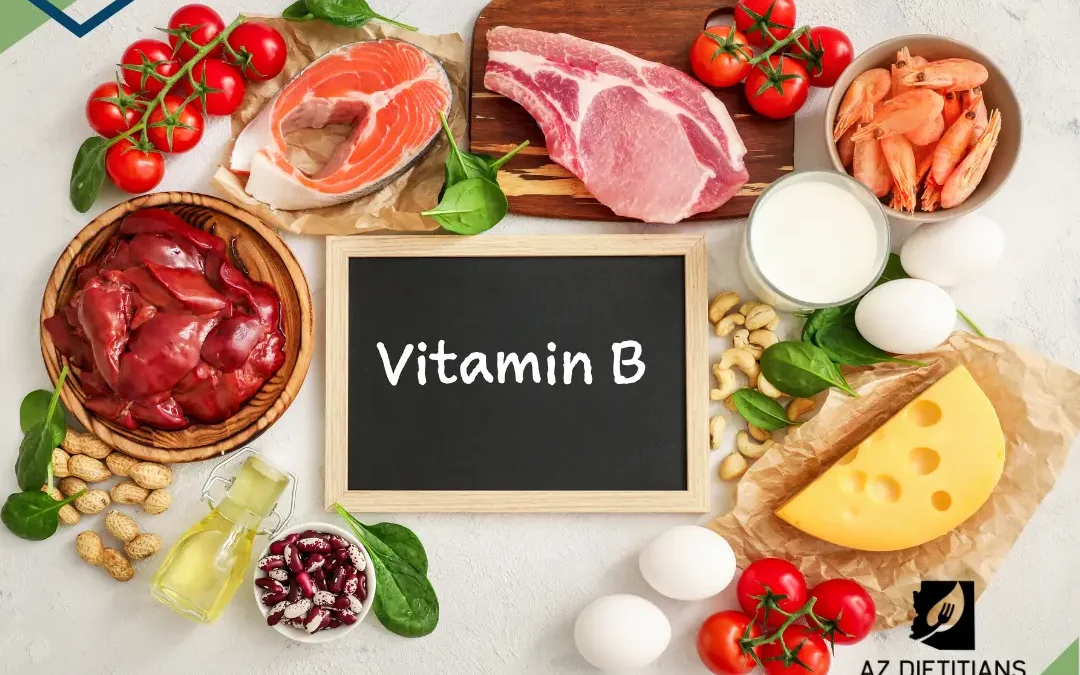
B vitamins play essential roles in energy production, metabolism, nerve function, and overall health. Discover the eight B vitamins, what each one does, and which foods can help you meet your nutritional needs.
Retatrutide is an investigational peptide generating excitement for its potential effects on weight loss, blood sugar, and metabolic health. Learn what current research says about how it works, how it compares to Ozempic, and important safety concerns to consider.